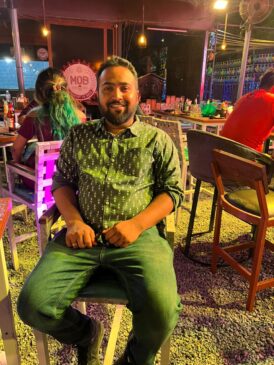
At Brilliant Read Media, it is our constant endeavour to identify and share some of the unique and compelling stories from the startup ecosystem. As part of this, we invited Sourav Kumar for an interview with Brilliant Read Media. To say further, Sourav is an entrepreneur and Co-Founder at CupShup. Let’s learn more about his background, inspiring journey so far and his advice for our growing community!
Excerpts from our exclusive interview with Sourav:
Can you walk us through your professional journey and how you arrived at co-founding CupShup?
Before joining CupShup, I was building a startup called ZapinG, which was a fashion rental platform. I ran it for about two years before it was eventually acquired. After that, I briefly ventured into the food business and co-founded a restaurant.
Later, I joined CupShup as its seventh employee and became the first team member heading the operations in the North Indian region. At that time, the company’s core focus was cup branding and early-stage/exploring brand activation touchpoints, largely Corporates.
My role involved building the North market from scratch which included driving sales, establishing operations, launching cities, and building relationships with brands and partners. Over time, I took ownership of larger responsibilities including sales strategy, client relationships, and operations across territories.
Through this journey and the scale we achieved together, I was given the opportunity to step into the role of Co-Founder in 2021, which marked a significant milestone in my professional journey.
What motivated you to transition from your earlier roles into entrepreneurship and start an agency?
One of my biggest motivations has always been creating opportunities for youth, especially college students and freshers who are looking to gain experience or earn while they learn.
At CupShup, a large part of our network includes students, freelancers, and young professionals who participate in planning and organizing brand campaigns and activations across cities. For many of them, it is an opportunity to earn pocket money, build skills, and gain on the job experience.
So the motivation goes beyond just building a business. It’s about improving lives across different levels, enabling students and freelancers to grow, helping brands improve their market presence, and creating meaningful impact through marketing campaigns.
You joined CupShup as one of the early employees and rose to Co-Founder – what were some pivotal milestones in that journey?
One of the earliest milestones was being entrusted with the responsibility to launch and scale operations in cities, especially in the North region. Building the market from scratch involved setting up operations, building a vendor network, and establishing strong relationships with brands.
Another major turning point was the COVID-19 period, which disrupted the entire offline marketing and activation ecosystem. It was a challenging time for the industry, but instead of slowing down, we focused on strengthening our network, building new partnerships, and exploring different digital brand touchpoints.
Those years tested our resilience as a team. Continuing to build, adapt, and stay committed during that phase played an important role in growing the company and eventually led to my transition into the Co-Founder role in 2021.
As Co-Founder, what are your core responsibilities today versus when you first started?
When I first joined CupShup, my role was primarily focused on managing and growing the operations in the North Indian region. My responsibilities were centered around sales, client acquisition, and operational execution within that geography.
Today, as Co-Founder, my responsibilities have expanded significantly. I focus on the overall growth of the organization, including optimizing multiple departments such as sales, marketing, client servicing, and operations.
The role has evolved from managing a region to driving strategic direction, scaling operations, and building systems that support long-term growth for the company.
How do you balance long-term strategy with day-to-day execution in a fast-paced growth environment?
In a fast-moving environment, it’s important to occasionally step back from daily execution and look at the bigger picture.
I try to regularly create time to declutter from operational responsibilities and analyze market trends, customer needs, and future opportunities. Understanding where the market is heading helps us realign our strategy accordingly.
At the same time, execution remains equally important. So the approach is to continuously rebalance short-term execution with long-term strategic thinking, ensuring that we are not only delivering results today but also building for the future.
With CupShup expanding into Tier-2 and Tier-3 cities, what unique challenges or opportunities have you observed?
Tier-2 and Tier-3 markets represent a massive opportunity for brands today. A significant portion of consumption growth is coming from these regions, and brands are increasingly interested in building stronger visibility there.
What excites me most is the growing buying power and digital adoption in these cities. People are consuming a lot of digital content, discovering new brands online, and are more open to trying new products and services.
For marketers, this creates a powerful opportunity to build brand presence in emerging markets where engagement levels are high and competition is still evolving.
What leadership principles guide you when building and nurturing your team?
One of the key principles I believe in is ownership-driven leadership.
I encourage team members to take accountability for their work and focus on continuously improving their skills. When people feel ownership, they naturally become more invested in outcomes and the overall success of the organization.
My focus is to create an environment where people learn, grow, and become better at what they do every day, because when individuals grow, the organization grows with them.
How do you cultivate innovation and accountability in your employees?
For accountability, we start by clearly defining goals and breaking them down into smaller milestones and targets. When objectives are structured in manageable steps, it becomes easier for teams to track progress and take responsibility for outcomes.
We also make it a point to recognize and celebrate achievements, which keeps motivation high.
On the innovation side, we continuously bring in fresh talent and new perspectives. Engaging with younger teams and emerging professionals helps us understand how new generations think about markets, products, and consumers. This constant flow of new ideas helps us stay innovative.
Additionally, technology and AI tools are helping accelerate creative thinking and experimentation across campaigns.
CupShup is described as an AI + integrated marketing agency — how is AI changing the way you strategize and execute for clients?
AI and technology are playing a transformative role in the way marketing campaigns are planned and executed.
At CupShup, we have been integrating AI across multiple stages of the marketing process, especially to improve operational efficiency and scalability. With the help of technology, we have been able to automate large parts of our operational workflows, creating systems that are more transparent and scalable for clients, vendors, and the overall ecosystem.
Going forward, we are also working on developing marketing tools that can support marketers across their entire journey from content creation and keyword research to social media planning and campaign management.
Our vision is to combine technology with integrated marketing execution to create smarter and more efficient marketing solutions.
How has your thinking or leadership evolved in response to market shifts like post-COVID changes in consumer behavior?
Post-COVID, one of the most important lessons for leaders has been empathy and adaptability.
Consumer behavior has shifted significantly, and people’s expectations from brands have also changed. As leaders, it’s important to stay sensitive to these changes and evolve strategies accordingly.
This means understanding customer comfort levels, adapting communication styles, and designing marketing experiences that are more relevant to today’s audience.
Which skills do you think are essential for future marketing leaders in the age of AI and data-driven decision making?
Future marketing leaders need to develop strong analytical and data interpretation skills.
With the rise of AI and digital platforms, marketers must be comfortable working with data, understanding consumer insights, and making informed decisions based on analytics.
At the same time, they must continuously upskill themselves in new media platforms, emerging technologies, and evolving marketing channels to stay relevant in a rapidly changing landscape.
Where do you see CupShup in the next 3–5 years — in terms of scale, services, or geography?
Over the next 3–5 years, we see CupShup evolving into a marketing technology–driven platform. While we will continue strengthening our integrated marketing services, our long-term vision is to build technology-led solutions that empower marketers and brands throughout their marketing journey.
This includes developing scalable tools, expanding our presence across more regions, and continuing to innovate at the intersection of marketing, technology, and data.
We are currently working on building these capabilities in-house and are planning to launch a range of marketing, SEO, and operations-focused tools in FY 2026–27.
These tools are designed to streamline workflows for marketing professionals and help them approach problems more creatively by acting as a smart creative and operational assistant across different stages of their campaigns.
What has been the toughest decision you’ve made as a co-founder, and how did you arrive at it?
One of the toughest decisions I’ve had to make as a co-founder came during the COVID-19 period, when the entire offline marketing and activation industry faced severe disruption. With business uncertainty and declining revenues, we had to make difficult calls to ensure the long-term sustainability of the company.
This included making the hard decision of restructuring the team to make the organization leaner and more efficient.
It was a difficult phase, but staying transparent, empathetic, and focused on long-term stability helped us navigate that period and emerge stronger as an organization.
What advice would you give to aspiring entrepreneurs looking to build a brand-focused tech or services startup?
My advice would be to think long term and stay patient with the process.
Building a company takes time, experimentation, and continuous learning. Entrepreneurs should focus on understanding their market deeply, building strong teams, and consistently improving their product or service.
It’s also important to keep learning, researching, and adapting, because markets evolve quickly and the ability to evolve with them is what ultimately determines long-term success.
Looking back, what one lesson from your journey have you found most transformative?
One of the most important lessons for me has been learning to move away from micromanagement and trust the team.
Earlier in my journey, I used to be very involved in every small detail. Over time, I realized that empowering people, giving them ownership, and supporting their growth leads to far better outcomes.
When individuals feel trusted and responsible, they perform better and grow faster and that ultimately strengthens the entire organization.
BrilliantRead is committed to bringing stories from the startup ecosystem, stories that reshape our perspective, add value to our community and be a constant source of motivation not just for our community but also for the whole ecosystem of entrepreneurs and aspiring individuals.
Note: If you have a similar story to share with our audience and would like to be featured on our online magazine, then please write to us at [email protected], we will review your story and extend an invitation to feature if it is worth publishing.